RAG does not eliminate hallucinations, it changes them
RAG transforms obvious hallucinations into subtle, data-grounded errors. Learn why validation is more critical than retrieval.
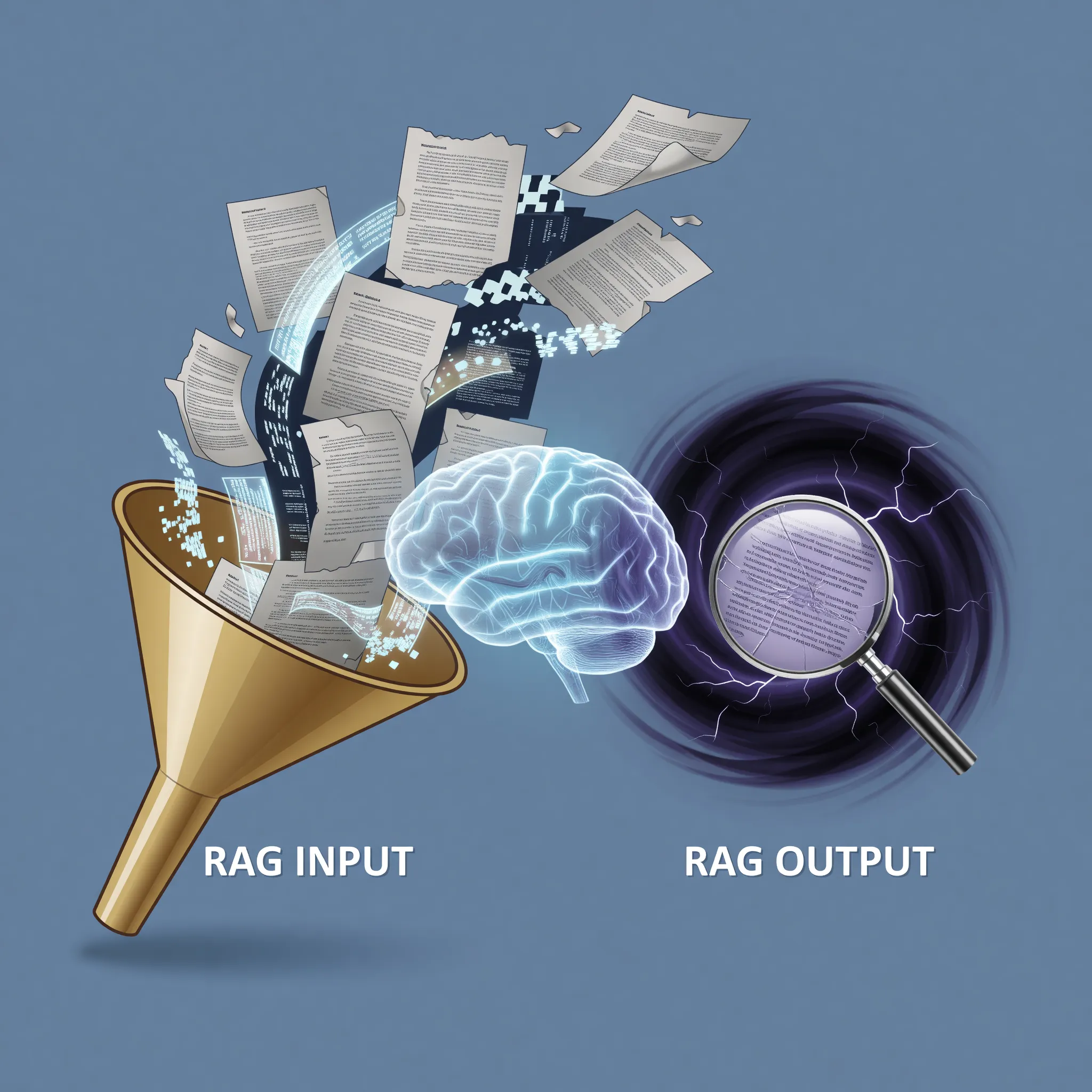
RAG does not eliminate hallucinations, it changes them
One of the most repeated promises around RAG is simple: “Add retrieval and hallucinations go away.” That promise is misleading. RAG does not remove hallucinations. It transforms them. Without RAG, hallucinations are usually obvious. The model invents facts, cites sources that do not exist, or confidently answers questions it should refuse.
With RAG, hallucinations become more subtle and therefore more dangerous. Instead of inventing information, the system now misuses real information. This is what actually changes when RAG is introduced:
• The model hallucinates by misinterpreting retrieved content rather than fabricating it. • Partial or out-of-context chunks are treated as complete truths. • Conflicting documents are merged into a single, confident narrative. • Retrieved content is over-trusted, even when relevance is weak or accidental.
These hallucinations are harder to detect because they are grounded in real data. The answer looks reasonable. The source exists. The wording feels precise. And yet the conclusion is wrong.
This is not a model problem. It is an architectural one. RAG systems fail when retrieval is treated as a guarantee of correctness instead of a probabilistic signal. Context injection without validation, confidence assessment, or conflict handling simply shifts where errors appear. In production systems, this leads to a false sense of safety. Teams believe hallucinations are “solved”, while users quietly lose trust after a few subtle but critical mistakes.
Robust RAG architectures acknowledge this reality: • Retrieved information must be validated, not blindly trusted. • The system must reason about confidence, not just relevance. • Conflicts between sources must be detected, not averaged out. • Refusal and clarification are valid outcomes, not failures.
RAG is powerful, but only when designed with humility. It does not eliminate uncertainty. It reshapes it. The goal of RAG is not to pretend hallucinations are gone. The goal is to make them visible, manageable, and controlled. That difference is what separates a demo from a system people can actually rely on.
#RAG #AIArchitecture #AIEngineering #Hallucinations #EnterpriseAI #SystemsThinking