PDU Session 101: Why “Conneced” doesn’t always mean “Working
This post explains what a PDU Session is in simple terms and why a device can look “connected” (registered) while data services still don’t work if the PDU session isn’t established reliably.
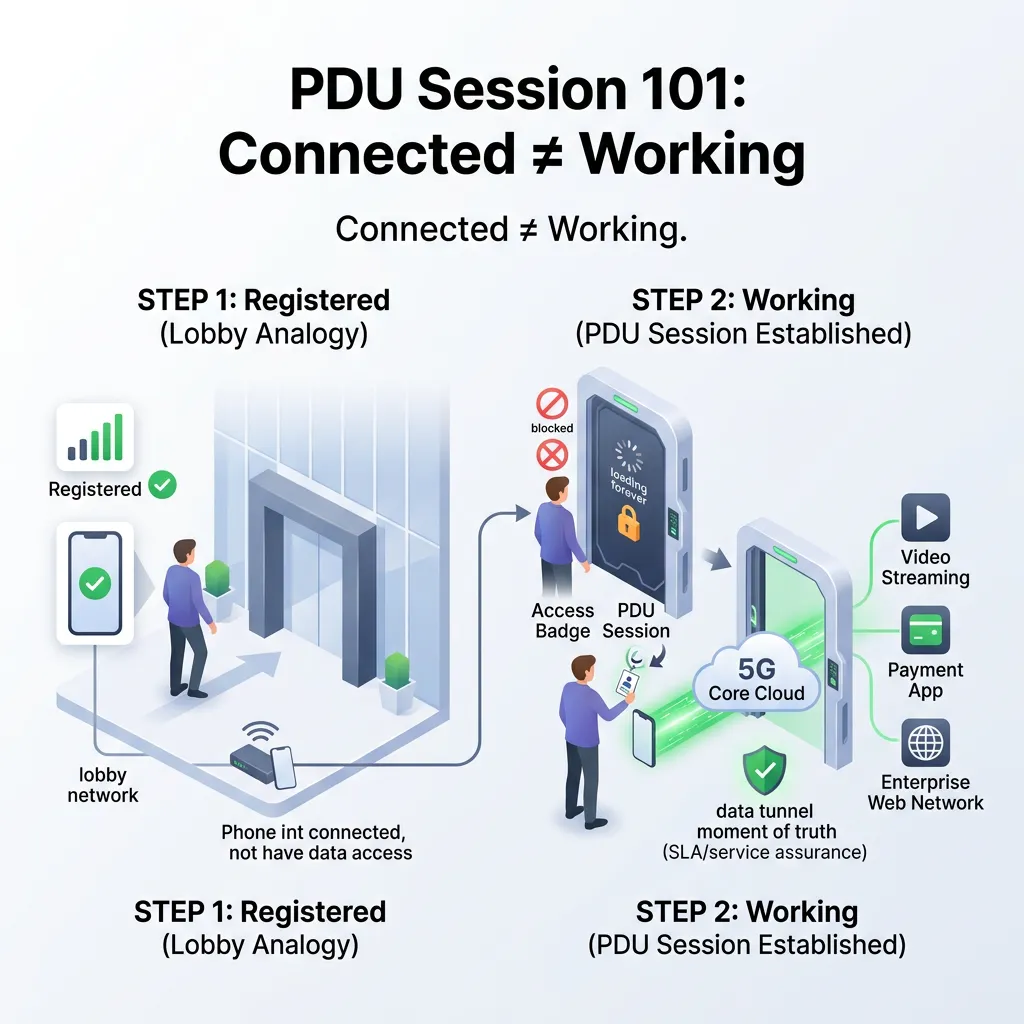
PDU Session 101: Why “Conneced” doesn’t always mean “Working”
Have you ever seen a phone showing 4G/5G bars… but apps don’t load? That’s one of the most common misunderstandings in mobile networks: “Connected” is not a single state. It’s a sequence of steps. A simple way to explain it (even to non-telecom people) is this:
• * Registered means the device is known by the network. • * PDU Session means the device has an actual data path to the packet network (internet / enterprise network) with policies and QoS.
So yes, your phone can look connected… while the service is not really working. Think of it like entering a building:
• * Registration is getting through the lobby and being recognized. • * PDU Session is getting your access badge activated and the doors actually opening to the areas you need.
No badge, no access—no matter how “inside” you look.
What a PDU Session enables (on plain English)
When a PDU session is established, the network assigns the ingredients that make data usable: • * An IP address or equivalent data connectivity context. • * Routing to a data network (internet or enterprise DNN). • * Policies (what you are allowed to do, speed limits, prioritization). • * QoS flows (how traffic is treated, especially for enterprise and slicing).
If the session fails, the user experience can look like:
• * “Apps are stuck loading.” • * “Messages send but media doesn’t.” • * “Speed test fails.” • * “It works after toggling airplane mode.” (because the device retries the session flow)
Why this matters for 5G and SLAs In 5G, especially with enterprise services and network slicing, PDU Session success is a “moment of truth” KPI. Because you can have:
• * Great coverage. • * Strong SINR. • * Plenty of capacity.
And still lose the customer’s trust if sessions fail intermittently. That’s why for slicing and enterprise SLAs, one of the first KPIs to watch is:
PDU Session Establishment Success Rate Because the best “5G performance” is worthless if the service can’t start reliably.
The big takeaway
Next time someone says “the network is up,” ask one extra question: “Are devices just registered… or are PDU sessions being established consistently?” That single distinction solves a lot of confusion—and it’s where real service assurance begins.
#5G #5GCore #PDUSession #NetworkSlicing #Enterprise5G #Telecom #TelecomStrategy #CustomerExperience #E2E #NetworkAutomation