O-RAN: Is It A Cost Play or A Strategic Control Play?
O-RAN isn’t just about lowering costs—it’s about regaining control, agility, and faster innovation through an open, well-governed operating model.
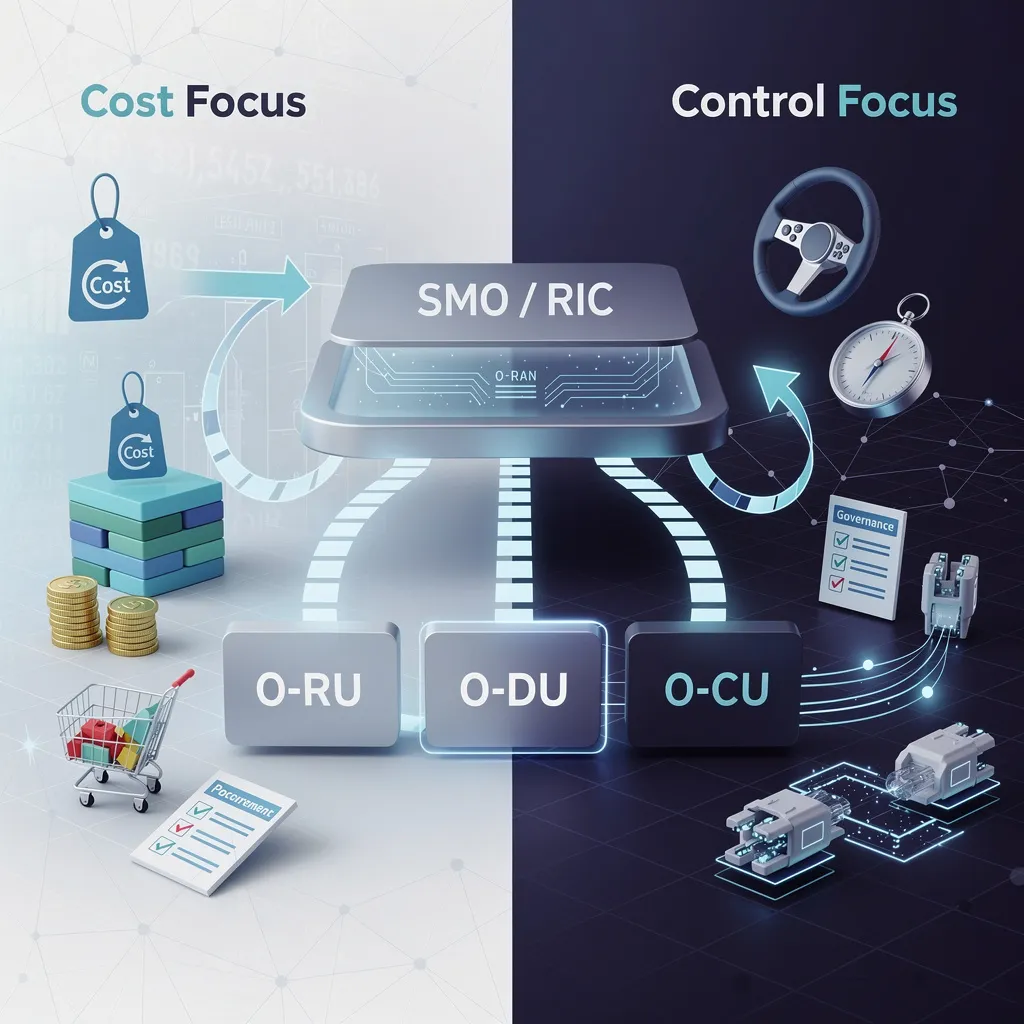
O-RAN: Is It A Cost Play or A Strategic Control Play?
In many boardrooms, O-RAN enters the conversation as a “cost story”: more vendors, more competition, lower prices. But on the engineering floor, O-RAN feels like something else: a way to regain control of the RAN roadmap, automate faster, and innovate without waiting for a single supplier’s release cycle.
Here’s the trap: if we adopt O-RAN only to squeeze unit costs, we may end up paying the bill somewhere else—integration effort, multi-vendor testing, lifecycle management, and operational complexity.
The real strategic question is not “Can O-RAN be cheaper?”
It’s “Can O-RAN make us more agile?”
-
• Cost savings are only real when operations, automation, and support models scale as cleanly as the architecture.
-
• Strategic control comes from openness plus strong governance of interfaces, performance, and accountability across vendors.
-
• Innovation becomes practical when the SMO/RIC ecosystem is used to deploy rApps/xApps that reduce OPEX and enable differentiated services.
-
• Risk grows quickly when O-RAN is treated as a procurement project instead of an operating model transformation.
My take: O-RAN is less a discount lever and more a control lever. The winners won’t be the operators who buy “open.” They’ll be the ones who operate “open” with discipline—clear SLAs, observability, automation-first processes, and a roadmap tied to business outcomes. Are we pursuing O-RAN to save money… or to own our network destiny?
#ORAN #OpenRAN #5G #RAN #SMO #RIC #NetworkAutomation #TelecomStrategy #DigitalTransformation #TelecomLeadership