Network Slicing: The Ultimate Test for Closed-Loop Automation
Why Network Slicing is the definitive test for SON and the necessity of real-time, cross-domain closed-loop control.
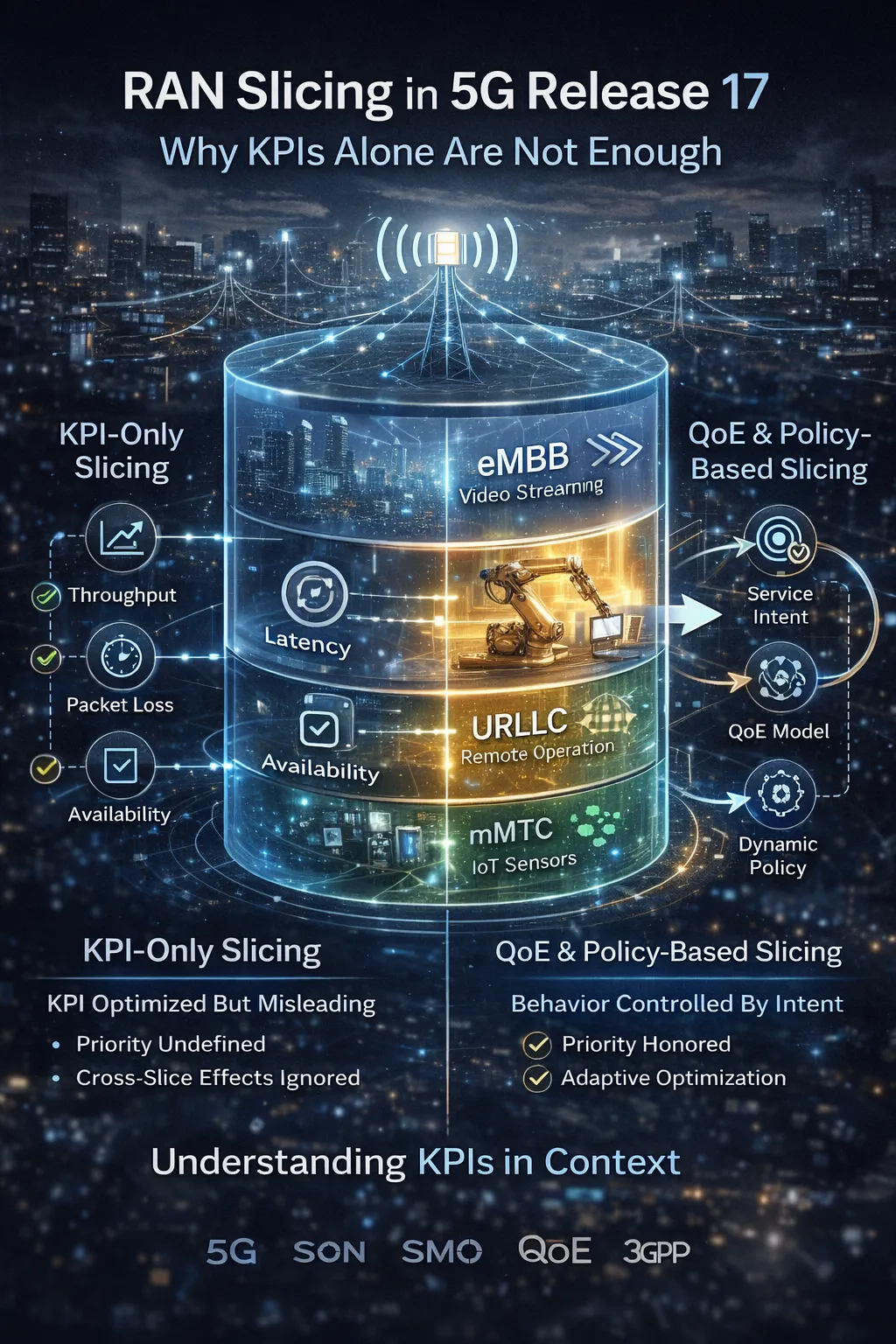
Network Slicing: The Ultimate Test for Closed-Loop Automation
Network Slicing is the “Holy Grail” of 5G. The ability to run multiple virtual networks with different performance characteristics on a single physical infrastructure. But for Network Slicing to move from a marketing concept to a commercial reality, it requires something most networks still struggle with: True, real-time, closed-loop automation. Network Slicing is the ultimate test for SON and automation for three main reasons:
- Dynamic Resource Orchestration: Slices are not static. They must be created, scaled, and terminated based on real-time demand. If a slice for “Remote Surgery” needs guaranteed low latency, the network must be able to reallocate resources instantly without affecting other slices.
- SLA Assurance: In a sliced world, KPIs are replaced by SLAs (Service Level Agreements). Automation must be able to monitor performance at the slice level and take corrective actions before the SLA is breached.
- Cross-Domain Coordination: A slice is not just a RAN feature. It spans the Core, Transport, and RAN. Automation must be coordinated across all these domains to ensure end-to-end performance.
This is where traditional, siloed SON fails. We need a Service Management and Orchestration (SMO) layer that can act as the “brain” of the network, coordinating automation across domains and vendors.
Without closed-loop automation, Network Slicing is just a manual configuration nightmare. With it, it becomes the foundation for the next generation of digital services.
(Getting the automation right is only half the equation — for the commercial and pricing side of making slicing a viable business, see Network Slicing Will Fail — Unless We Change The Commercial Model.)
#5G #NetworkSlicing #Automation #SON #SMO #ORAN #TelecomInnovation #NetworkOptimization