Why multi-vendor RAN is still hard
This post explains why multi-vendor RAN remains challenging despite open interfaces, highlighting how true complexity lies in behavior alignment, integration, and system-level coordination.
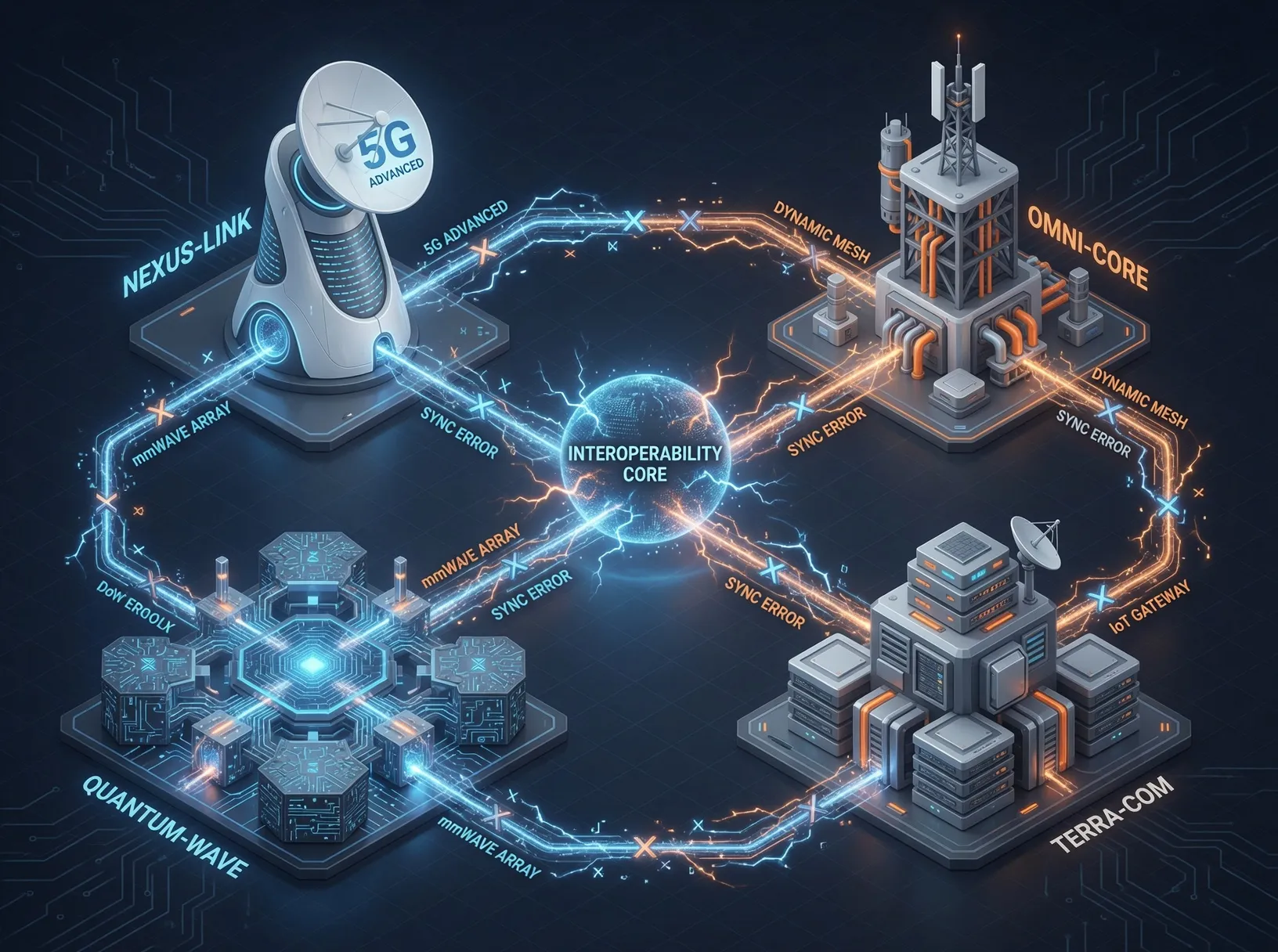
Why multi-vendor RAN is still hard
Multi-vendor RAN has been a long-standing goal in the industry. More flexibility, reduced vendor lock-in, faster innovation… At least, that is the promise.
And with O-RAN, open interfaces, and standardized architectures, it feels like we are closer than ever. But in practice… multi-vendor RAN is still hard. Not because the interfaces do not exist.
But because alignment goes far beyond interfaces.
Here are some common misconceptions:
• * Many assume that standardized interfaces guarantee seamless interoperability, when in reality they only define how systems communicate, not how they behave. • * It is often believed that introducing multiple vendors increases flexibility without significantly increasing operational complexity. • * There is an expectation that SON, SMO, and rApps will behave consistently across vendors, despite differences in implementation. • * Some think integration is a one-time effort, when in reality it is a continuous process as networks evolve.
In real deployments, the challenges are more subtle… and more impactful:
• * Different vendors interpret standards in slightly different ways, leading to inconsistencies in behavior. • * Parameter configurations and feature implementations are not always aligned, even when names are similar. • * Data models and KPI definitions can vary, making cross-domain optimization more difficult. • * Troubleshooting becomes more complex, as issues may originate from interactions between vendors rather than a single root cause.
This creates a new type of challenge: Not technical limitations… but system-level coordination.
Because even if each component works correctly on its own… The network may still behave unpredictably as a whole.
From my experience, successful multi-vendor strategies require a shift in mindset:
• * They focus on end-to-end behavior, not individual vendor performance. • * They invest heavily in validation, testing, and continuous integration processes. • * They prioritize data normalization and KPI alignment across domains. • * They accept that integration is not a phase… it is an ongoing capability.
O-RAN is a major step forward. But openness does not eliminate complexity.
In fact, it redistributes it. And the real challenge is no longer connecting systems… It is making them behave as one.
#5G #ORAN #RAN #MultiVendor #NetworkAutomation #SMO #Telecom #RANOptimization #Interoperability