Gemma 4 and the real question: Who will control AI?
Explains how open-weight AI models like Gemma 4 are shifting power from centralized control to distributed innovation, redefining who builds and owns AI capabilities.
Gemma 4 and the real question: Who will control AI?
We’ve been talking about models like Gemma 4… What they are. What they can do. But there is a more important question we should be asking:
Who is shaping the future of AI? For years, the most powerful AI capabilities were concentrated in a few companies. Access was controlled. Innovation was centralized. Users were… just users.
Now, that is starting to change. Open-weight models like Gemma 4 are challenging that model. And this creates a tension:
- Closed Models Offer Control And Performance, but limit flexibility and transparency.
- Open Models Enable Innovation And Adaptability, but require more responsibility from those who use them.
This is not just a technical discussion. It is a strategic shift.
Because the real advantage is no longer just having access to AI… It is knowing how to use it, adapt it, and integrate it into real systems.
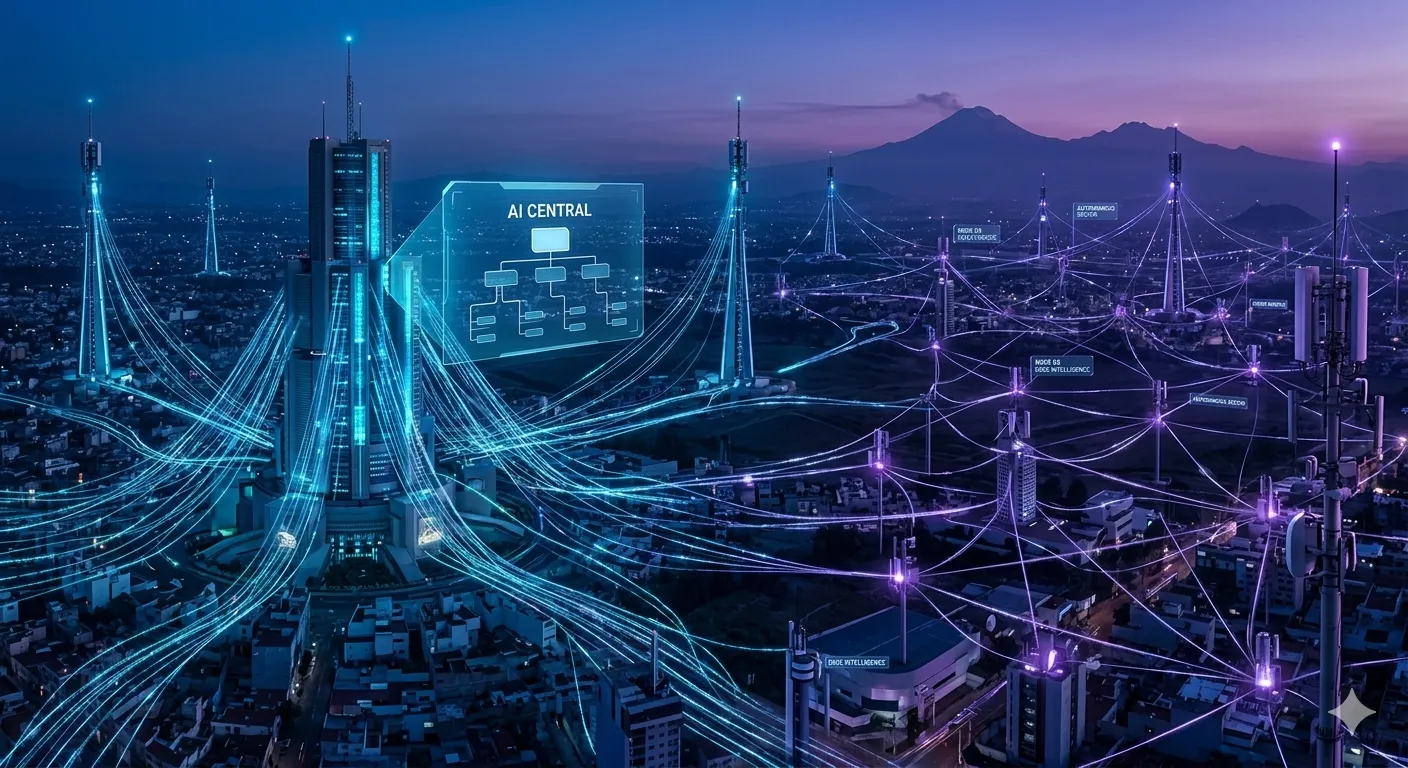
From a telecom perspective, this becomes even more interesting. Are we going to depend on external intelligence? Or are we going to build intelligence into the network itself? Think about this:
- Networks That Learn And Optimize Themselves are no longer a concept, but an achievable direction.
- Engineers That Understand AI Will Redefine Their Role, moving from operators to designers of intelligent systems.
- Companies That Adopt Early Will Build A Structural Advantage that is difficult to replicate later.
So maybe the real question is not: “Are open models competitive?”
But:
“Who will be ready to take advantage of them?” Because AI is no longer just a tool. It is becoming infrastructure.
#AI #MachineLearning #Gemma #FutureOfAI #Telecom #ORAN #Innovation #Leadership