E2E KPIs 101: Why 5G can’t be measured only in RAN
This post explains why 5G performance can’t be judged by RAN KPIs alone: users experience an end-to-end service path, so E2E KPIs are what truly reflect reliability, consistency, and SLA outcomes.
E2E KPIs 101: Why 5G can’t be measured only in RAN
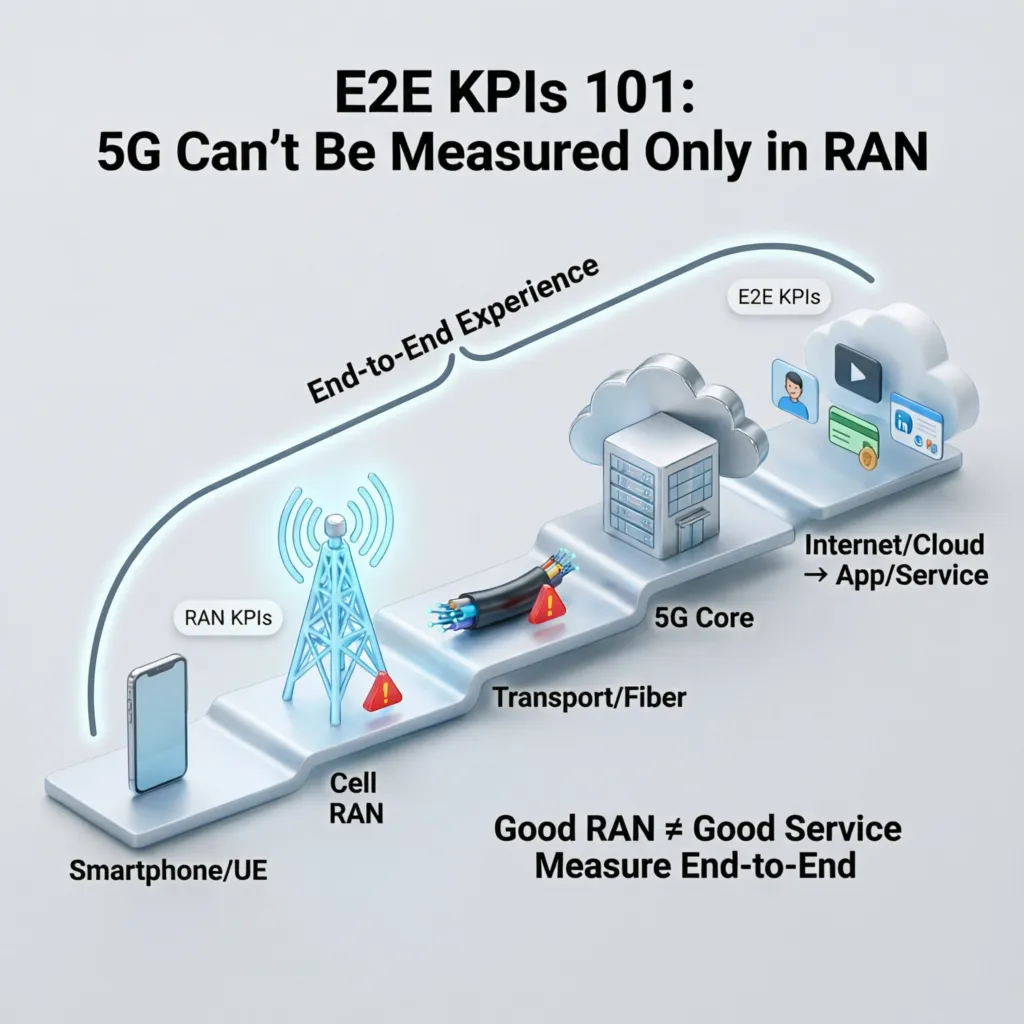
One of the biggest mistakes in 5G performance discussions is assuming that “good RAN KPIs” automatically mean “good service.” They don’t. Because users don’t experience the RAN. They experience an end-to-end path: Device → Radio → Transport → Core → Internet/Cloud → Application. So, when someone says “5G feels slow,” focusing only on RSRP, SINR, or cell throughput is like checking a car’s engine and ignoring the traffic, the road, and the driver. Here’s a simple mental model:
• * RAN KPIs tell you if the radio link is healthy. • * E2E KPIs tell you if the service is actually working.
And E2E is where monetization lives, because SLAs are service promises, not RF promises. Three examples that explain why RAN-only measurement fails:
• * A site can show strong signal and good SINR, but the experience is poor if backhaul is congested or unstable. • * A market can have excellent throughput averages, but users suffer if latency spikes happen during peak hours due to core or routing issues. • * A slice can look “fine” at the radio layer, but fail commercially if registration or session setup fails intermittently.
If you want 5G performance to be meaningful for executives and customers, start measuring what they care about:
• * Reliability of getting in and staying connected. • * Consistency over time, not only peak performance. • * Service success per use case, per location, per time window.
Because the real question is not “Is the RAN green?” It’s “Did the customer succeed in the moment that mattered?”
#5G #Telecom #RAN #E2E #CustomerExperience #TelecomStrategy #NetworkAutomation #5GCore #Enterprise5G #NetworkSlicing