Why Dynamic Load Balancing (DLB) is still misunderstood in modern RAN
Understanding DLB
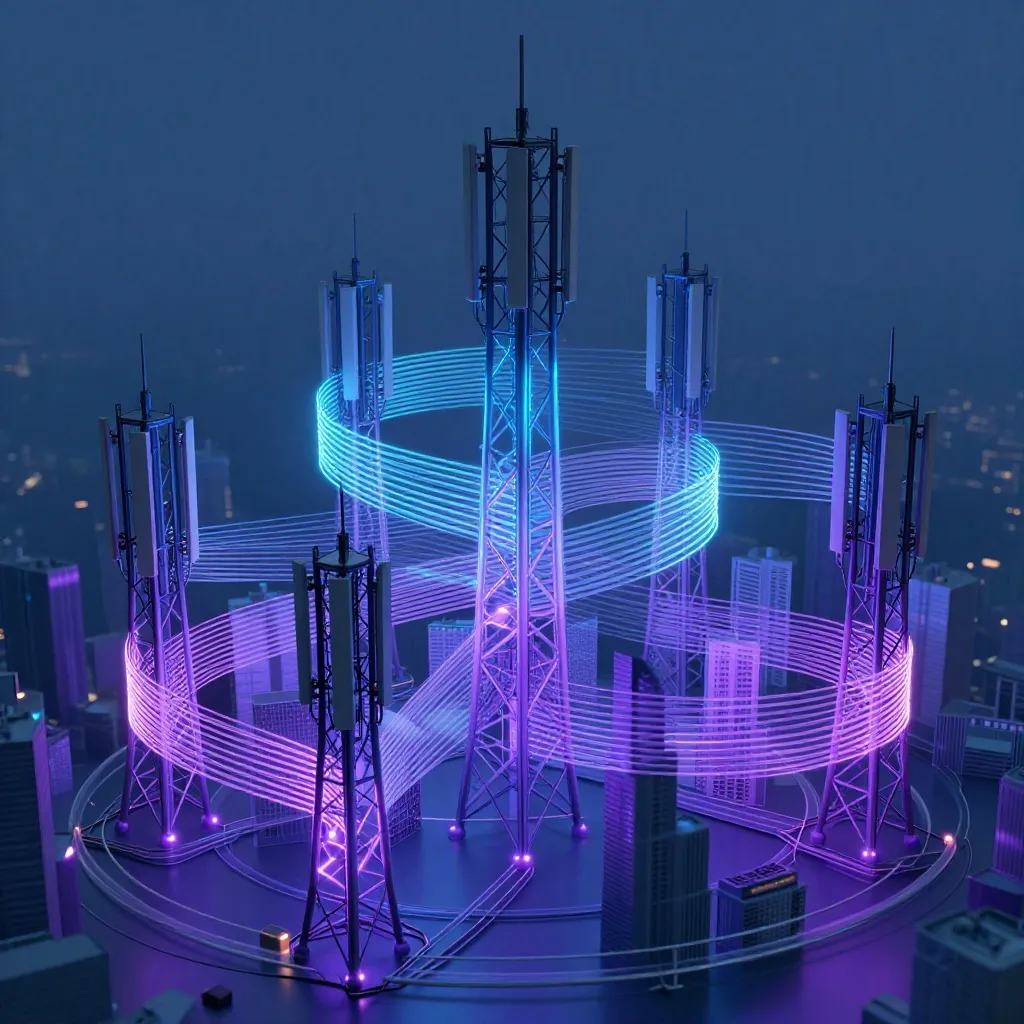
Why Dynamic Load Balancing (DLB) is still misunderstood in modern RAN
Dynamic Load Balancing has been around for years. It is not new. It is not revolutionary. And yet… it is still one of the most misunderstood features in RAN optimization.
After working with multiple SON platforms and multi-vendor networks, I have seen a recurring pattern: DLB is often enabled with high expectations, but without a clear understanding of its real impact.
At a high level, DLB sounds simple: move traffic from congested cells to less loaded neighbors. But in reality, it is much more delicate than that. The problem is not the algorithm. The problem is how we expect it to behave.
Here are some common misconceptions I still encounter:
• * Many assume DLB will solve congestion automatically, when in reality it only redistributes existing problems across the network. • * It is often treated as a “set and forget” feature, without continuous tuning of thresholds, offsets, and mobility parameters. • * Engineers expect immediate KPI improvements, without considering the trade-offs in coverage, interference, and user experience. • * In multi-vendor environments, inconsistent parameter configurations can lead to conflicting actions and unstable behavior.
In practice, poorly tuned DLB can create more issues than it solves:
• * It can trigger unnecessary handovers, increasing signaling load and degrading mobility KPIs. • * It can push users to weaker cells, negatively impacting throughput and SINR. • * It can create ping-pong effects, especially in dense urban scenarios. • * It can mask the real root cause of congestion, delaying proper capacity planning decisions.
So what is the right way to look at DLB? From my perspective, DLB should not be seen as a “capacity solution”, but as a fine-tuning tool within a broader optimization strategy. It works best when:
• * The network already has a solid baseline in coverage and neighbor relations. • * Mobility parameters are aligned and stable across vendors. • * There is clear visibility of traffic distribution and user experience metrics. • * It is combined with other mechanisms like interference management and capacity expansion.
As we move towards O-RAN, SMO, and rApps, DLB will not disappear. It will evolve. But the principle remains the same: automation is only as good as the strategy behind it. Sometimes, the biggest improvement does not come from enabling a feature… but from truly understanding its limits.
#5G #RAN #RANOptimization #SON #ORAN #Telecom #Wireless #NetworkOptimization #AIinTelecom