Cloud RAN: Flexibility or new complexity?
This post explores how Cloud RAN introduces flexibility but also shifts complexity from hardware to software, emphasizing the new operational and architectural challenges it brings.
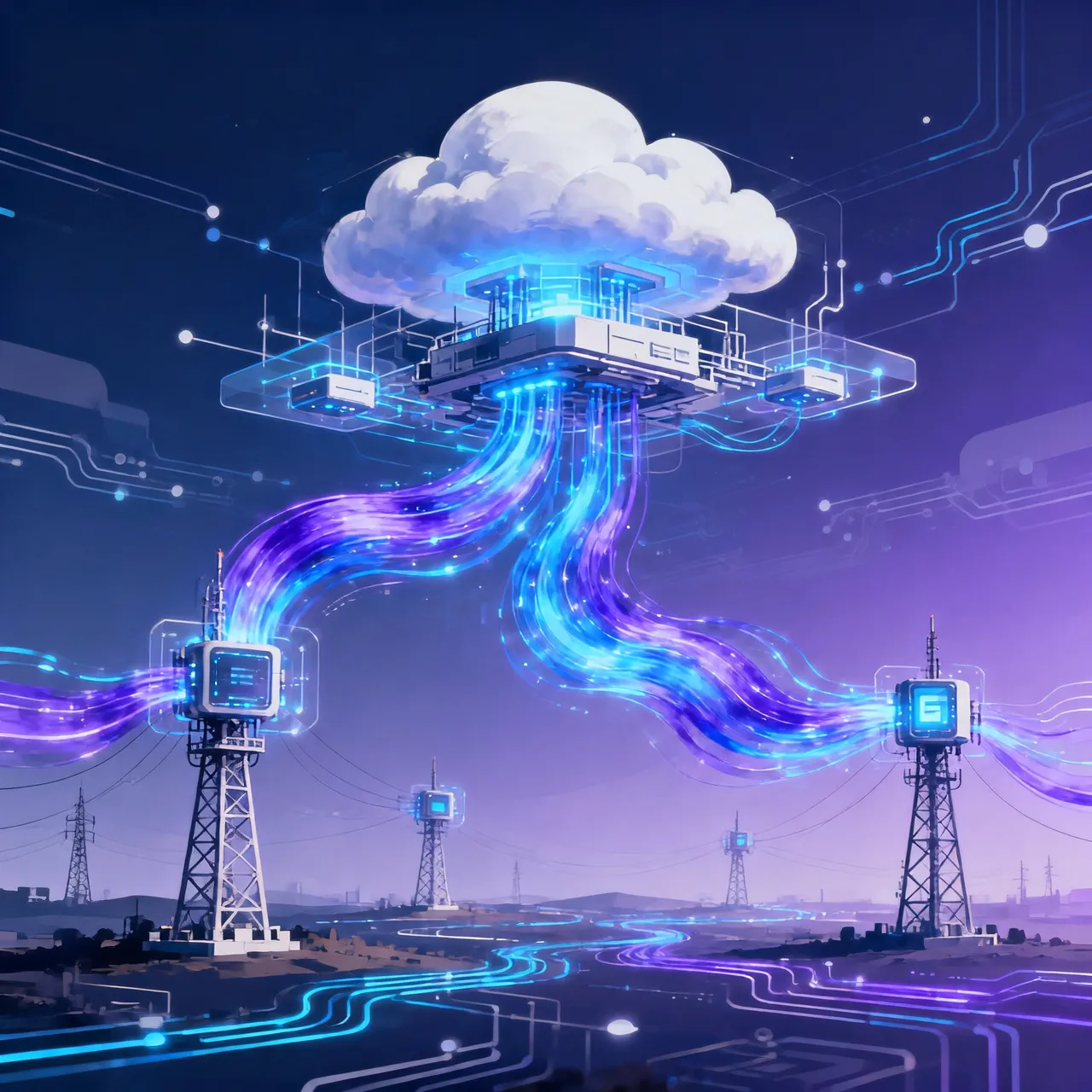
Cloud RAN: Flexibility or new complexity?
Cloud RAN is often presented as the next big step in network evolution. More flexibility. Better scalability. Vendor diversity. And from an architectural perspective… all of that is true.
But after working closely with RAN optimization and multi-vendor environments, there is something that becomes very clear: Cloud RAN does not remove complexity. It moves it. From hardware… to software. From sites… to data centers. From physical design… to system integration.
Here are some common misconceptions:
- Many assume that virtualization simplifies operations, without considering the additional layers introduced by cloud infrastructure.
- It is often believed that scaling becomes easier, while ignoring dependencies on fronthaul capacity and latency constraints.
- There is an expectation that Cloud RAN improves performance by default, without accounting for synchronization and timing challenges.
- Some think that moving to the cloud reduces operational effort, when in reality it requires new skills and processes.
In practice, Cloud RAN introduces a different kind of complexity:
- Fronthaul becomes a critical dependency, especially for latency-sensitive functions.
- Resource allocation is no longer static, requiring dynamic orchestration across compute and network domains.
- Troubleshooting shifts from RF issues to distributed system interactions.
- Performance becomes dependent not only on radio conditions, but also on cloud infrastructure behavior.
This creates a new operational reality: The network is no longer just a radio system. It is a distributed computing system with radio constraints.
From my experience, successful Cloud RAN deployments focus on more than architecture:
- They align cloud infrastructure design with RAN performance requirements.
- They ensure strict control of latency, synchronization, and transport quality.
- They integrate RAN and IT teams, breaking traditional silos.
- They redefine optimization processes to include both RF and cloud dimensions.
Because in the end, Cloud RAN is not just about where the functions run… It is about how well the entire system behaves together. Flexibility is real. But it comes with a cost.
And the real question is not whether Cloud RAN works… It is whether we are ready to operate it.
#5G #CloudRAN #ORAN #RAN #NetworkAutomation #Telecom #SMO #FutureOfRAN #EdgeComputing