AI, SMO AND THE FUTURE OF ENERGY-AWARE RAN
Explores how AI, SMO, and intelligent automation are enabling energy-aware RAN optimization by dynamically balancing network performance and power consumption.
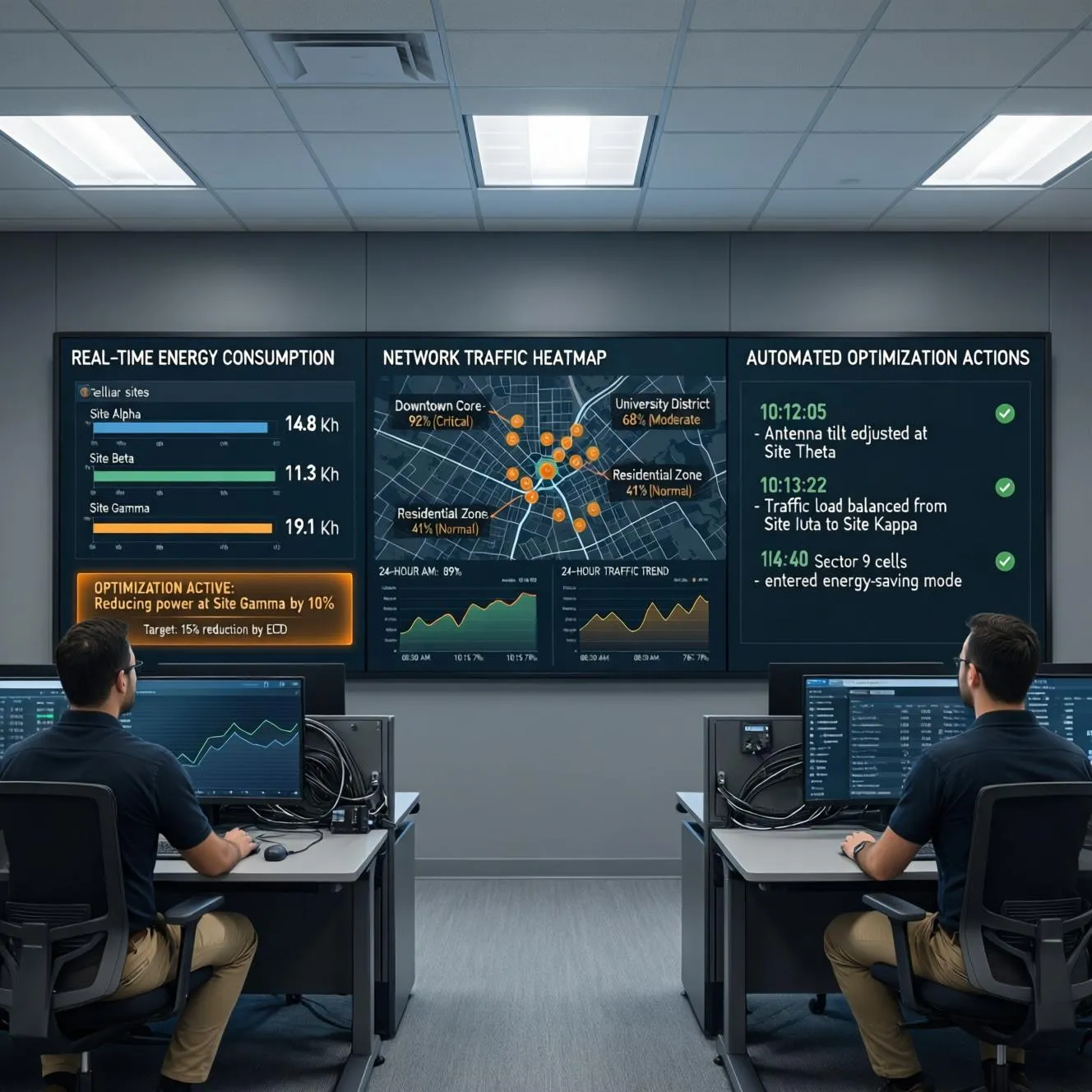
AI, SMO AND THE FUTURE OF ENERGY-AWARE RAN
Over the past few posts, we’ve discussed energy efficiency from different perspectives:
- Business impact.
- Network architecture.
- Performance tradeoffs.
- And emerging KPIs.
But there is one reality we haven’t addressed yet: Manual energy optimization does not scale. Modern networks are becoming too large, too dynamic, and too complex. Traffic patterns change every hour. User behavior changes every day. And network conditions change every second. Trying to optimize energy consumption manually across thousands of sites is becoming increasingly difficult.
This is where AI and SMO may fundamentally change the game. Not because they introduce new energy-saving features. But because they enable better decisions.
- AI Can Predict Traffic Demand Before It Occurs, allowing network resources to be adjusted proactively rather than reactively.
- SMO Can Coordinate Energy Optimization Across Multiple Network Domains, instead of treating each site independently.
- Intelligent Automation Can Adapt Resource Usage Dynamically, balancing performance and power consumption in real time.
- Closed-Loop Optimization Can Continuously Refine Energy Policies based on changing traffic, mobility, and operational conditions.
The industry often focuses on new radios, more efficient hardware, and advanced sleep modes. And those innovations certainly matter.
But I believe the next major gains will come from intelligence. Because the challenge is no longer knowing how to save energy. The challenge is knowing: When. Where. And how much. Without impacting user experience.
That requires continuous decision-making at a scale no human team can realistically achieve. Which is why energy efficiency is becoming more than an engineering problem. It is becoming an orchestration problem. A data problem. And increasingly, an AI problem.
The future Energy-Aware RAN may not consume less energy simply because the hardware is more efficient. It may consume less energy because the network learns how to operate more intelligently.
This is the fifth and final post of my Energy Efficiency in RAN series. Thank you to everyone who contributed perspectives and discussions throughout the series.
What do you think? Will the next breakthrough in energy efficiency come primarily from better hardware… or from better decisions?
#5G #RAN #EnergyEfficiency #AI #SMO #ORAN #NetworkOptimization #TelecomInnovation