AI-RAN Needs Data Before It Needs More AI
Understand why AI-RAN success depends on RAN data quality first: PM granularity, vendor counters, topology drift and the SMO data layer.
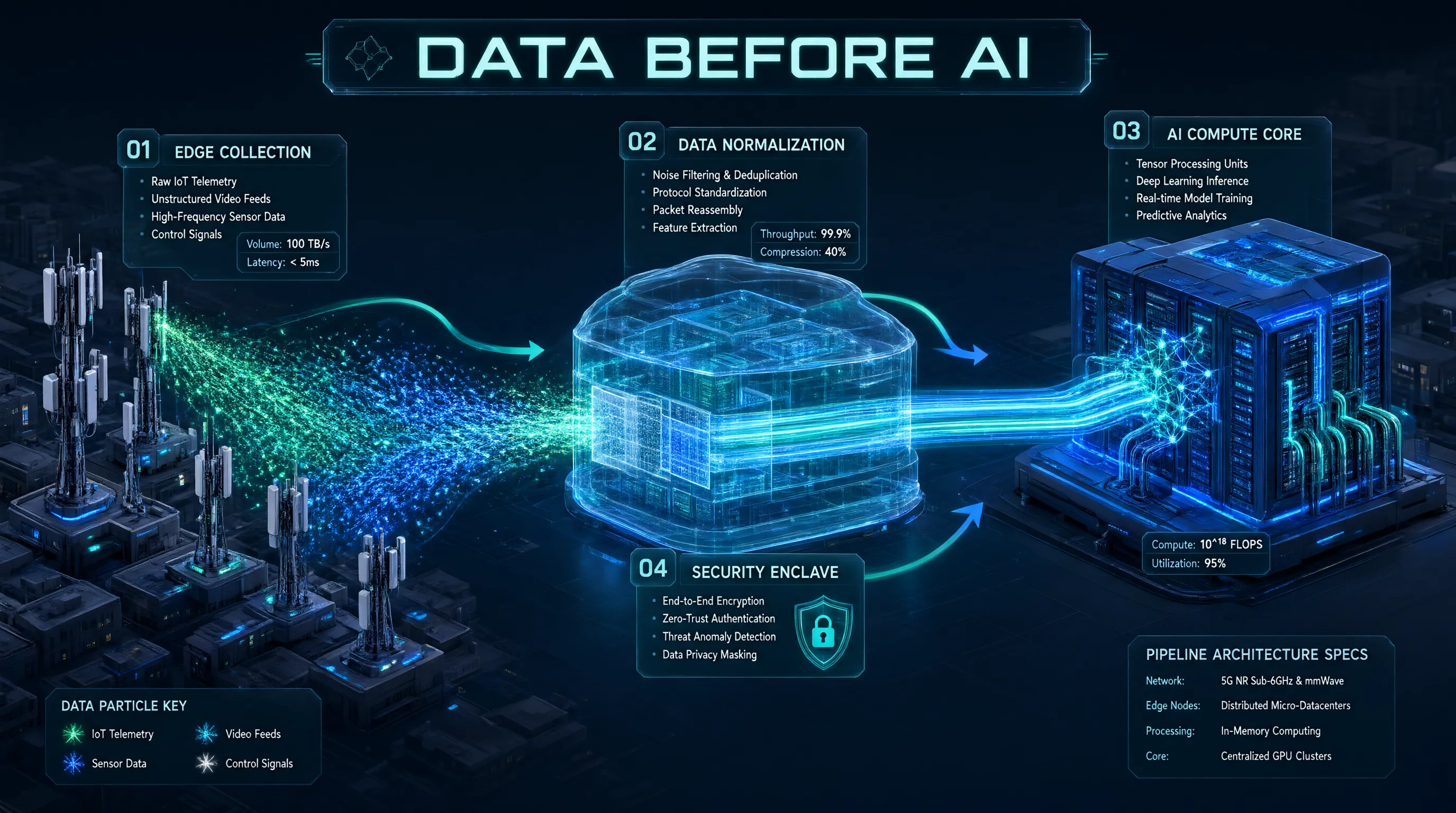
AI-RAN Needs Data Before It Needs More AI
Most AI-RAN discussions start with the model: which architecture, which accelerator, how many parameters. In my experience with SON and automation projects, the first real bottleneck shows up much earlier, the moment someone tries to pull clean data from the network.
A model is only as good as what it learns from, and RAN data is messy by nature.
These are the issues I keep running into:
🔹 PM counters usually arrive in 15 minute granularity, which works for reporting but is too coarse for decisions that need to react in seconds. 🔹 The same KPI is often calculated differently across vendors, so a model trained in one region struggles when it meets another. 🔹 Topology and inventory data drift over time, and a model reasoning over outdated neighbor relations makes confident mistakes. 🔹 Labels are almost nonexistent, because nobody documented why an engineer changed a tilt or a threshold three years ago.
This is why the SMO matters so much in the AI-RAN conversation. A solid data layer, with consistent collection over O1, normalized counters and access to UE level traces where regulation allows, is what turns AI from a demo into something an operator can trust.
The same applies to the path toward L4 Autonomous Networks. Autonomy depends on decisions, and decisions depend on data the network can stand behind.
The question I would ask any AI-RAN initiative today is simple: how much of the budget is going into the data pipeline compared with the model?
#AIRAN #ArtificialIntelligence #ORAN #SMO #AutonomousNetworks #SON #DataEngineering #5G