AI FOR RAN ENERGY SAVING: A REAL CLOSED LOOP USE CASE
Learn how to build a closed loop for AI for RAN energy saving, from traffic prediction and rApp decisions to KPI verification, guardrails and rollback.
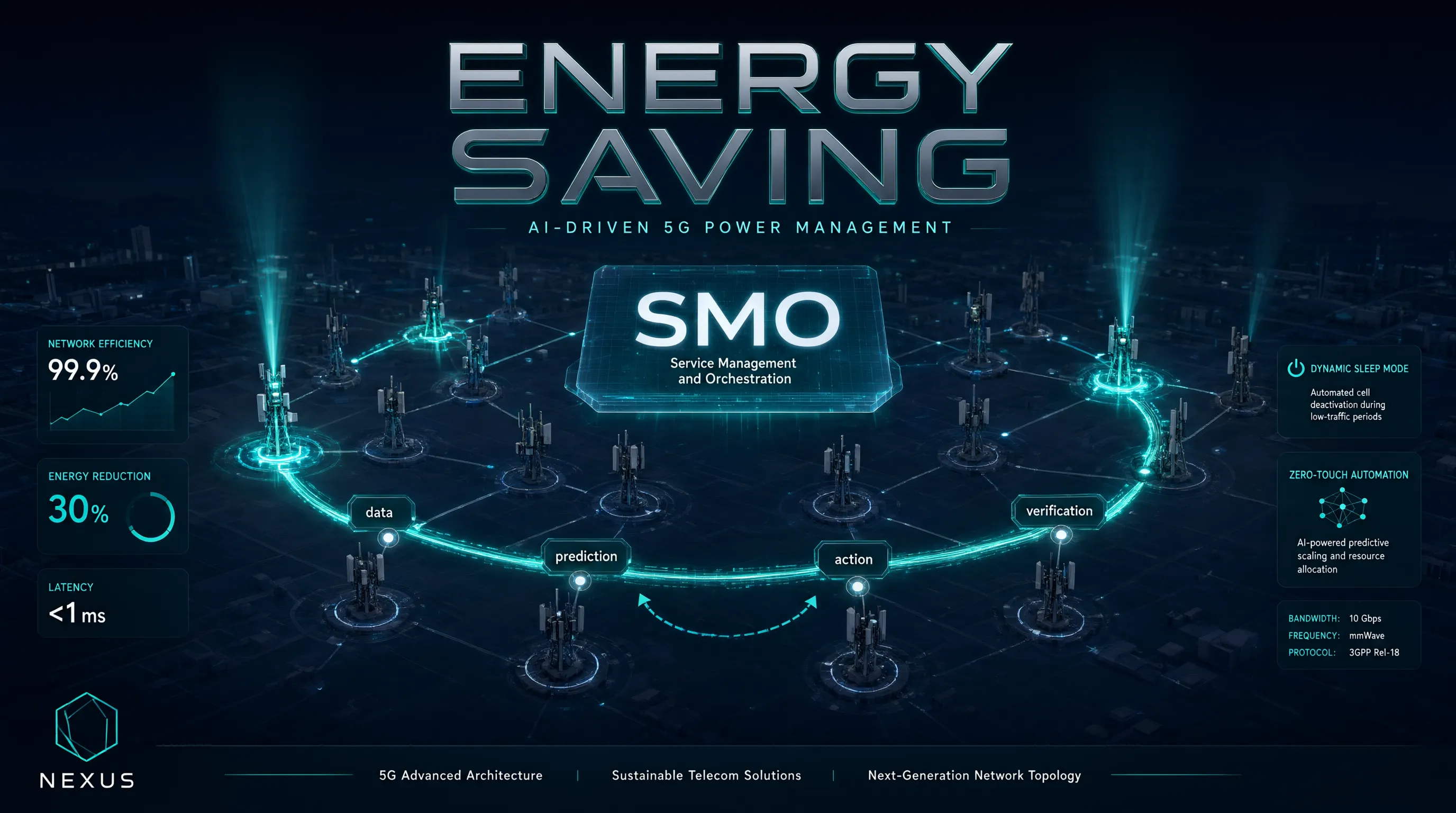
AI FOR RAN ENERGY SAVING: A REAL CLOSED LOOP USE CASE
Energy saving is probably the most practical place to start with AI in RAN. The RAN consumes a large share of an operator’s energy, traffic drops a lot at night, and many capacity layers sit idle for hours. The opportunity is clear. The difficulty is switching things off without users noticing.
Here is how I would build the closed loop, step by step:
- Collect cell level data such as PRB utilization, active users, throughput and neighbor relations, so the model knows what each layer is really doing.
- Predict traffic per cell for the coming hours, because a decision based only on current load will always react too late.
- Let an rApp in the SMO choose which capacity layers, carriers or MIMO channels can be turned off, while the coverage layer always stays on.
- Verify the impact right after the action with accessibility, retainability, throughput and the load of neighboring cells.
- Roll back automatically when any of those indicators crosses a threshold, and feed that event back into the model.
What makes this work in practice are the guardrails. Critical sites, planned events, emergency services and cells with recent degradation should stay outside the loop. Without those exclusions, the first complaint from a customer stops the whole project.
I like this use case because it is measurable. Energy per site and per traffic unit are simple to track, and the network quality KPIs act as the safety net. It is a good way to build trust in automation before moving to more complex loops.
#5G #RAN #EnergySaving #AIRAN #SMO #rApps #TelecomInnovation