6G DESIGN PRINCIPLES RAN ENGINEERS SHOULD LEARN NOW
Learn the 6G design principles RAN engineers should study today, from AI native design and sensing to upper mid band spectrum and energy efficiency.
6G DESIGN PRINCIPLES RAN ENGINEERS SHOULD LEARN NOW
6G will not arrive as a single event around 2030. Its ideas are already showing up inside 5G Advanced networks, and many of us will meet them in live optimization work long before the specs are final. That is why the learning curve starts today.
These are the areas I would put on every RAN engineer’s study list:
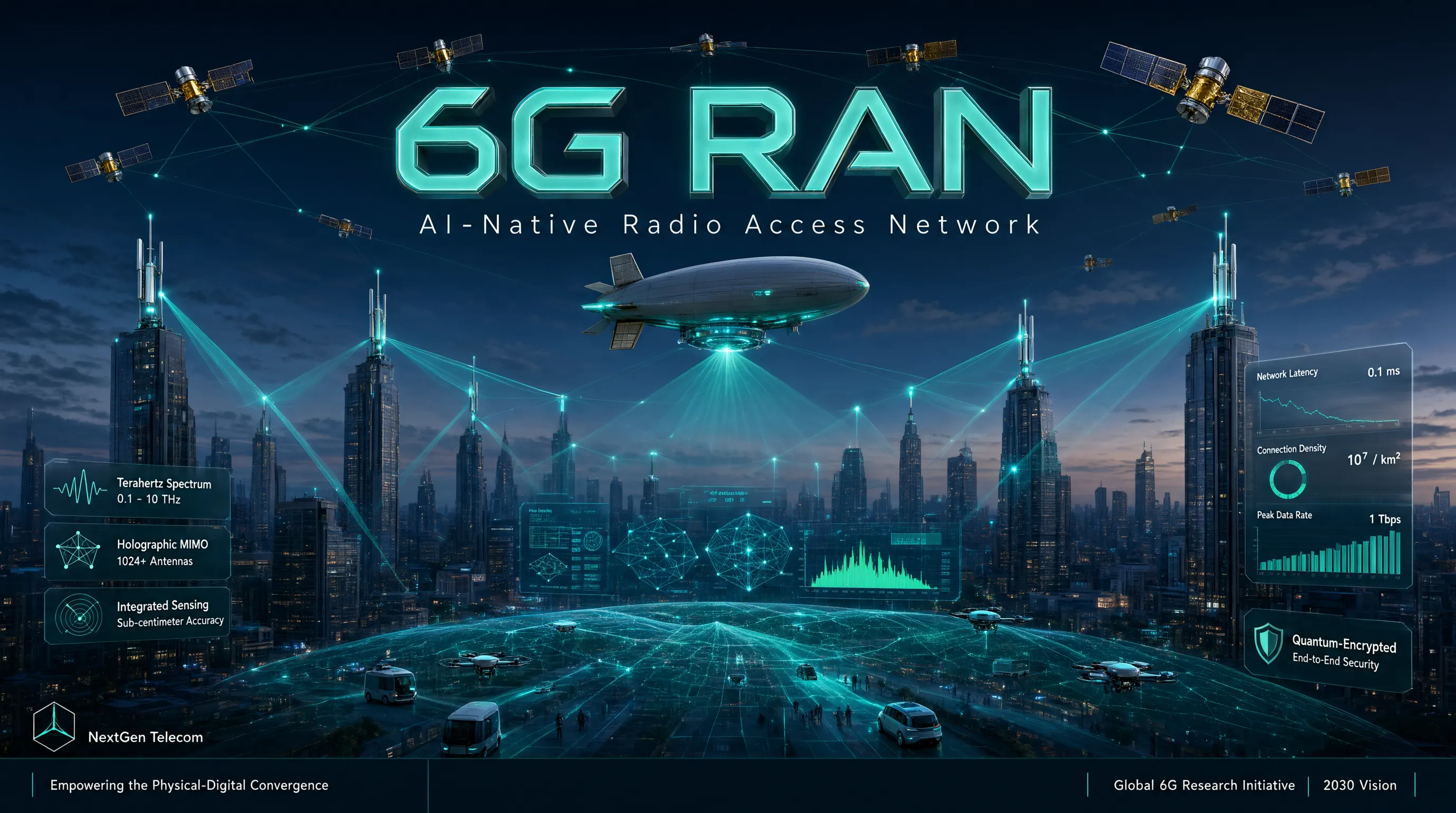
- AI native design puts models inside the air interface and RAN operations, so data pipelines and model lifecycle become core skills.
- Integrated sensing and communication turns the radio into a sensor, which changes how we think about beams, waveforms and use cases.
- Upper mid band spectrum, roughly 7 to 15 GHz, promises a new balance between coverage and capacity that will require fresh propagation and site density thinking.
- Non terrestrial integration is planned as part of the architecture from day one, which makes NTN knowledge relevant for terrestrial engineers too.
- Energy efficiency becomes a design constraint with the same weight as throughput, so KPIs will need to reflect energy per bit and not only peak rates.
- Open and programmable architectures like O-RAN with SMO, rApps and xApps are the natural base to introduce these capabilities in live networks.
You do not need to become a researcher. Pick one of these areas and connect it to the work you already do in optimization, SON or SMO.
The engineers who start now will be designing 6G networks while others are still reading about them.
#6G #5GAdvanced #RAN #ORAN #AIRAN #SMO #TelecomInnovation #RANEngineering